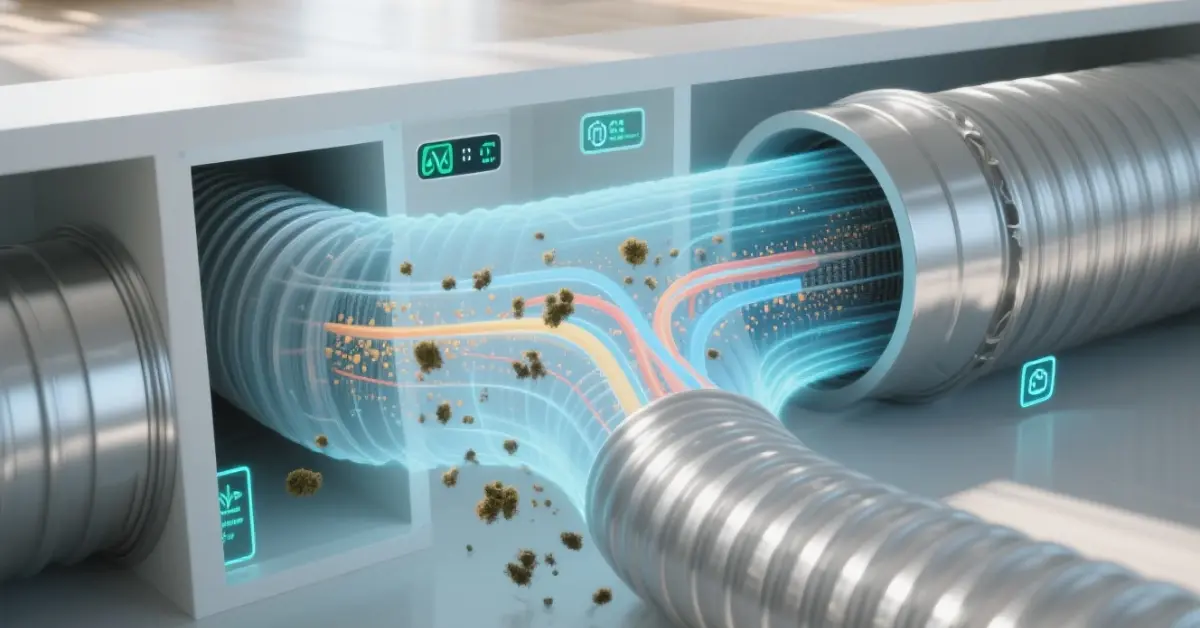
Your home’s air ducts act as the respiratory system of your living space, constantly circulating air to keep you comfortable. Understanding them is key to maintaining a healthy, energy-efficient home. In short, well-maintained air ducts improve indoor air quality, lower monthly utility bills by enhancing HVAC efficiency, and prevent the buildup of harmful allergens or mold.
To keep your system peak-performing, you should look for signs of dust buildup, seal any leaks to prevent energy waste, and hire certified professionals for deep cleaning every few years. This guide covers everything from basic maintenance to knowing when it’s time for a professional replacement.
Why Air Ducts Matter
The air ducts in your home do much more than just carry air; they regulate the temperature and cleanliness of every room. When your ductwork is in good shape, your furnace and air conditioner don’t have to work as hard, which extends the life of your expensive HVAC equipment.
Furthermore, because all the air you breathe passes through these channels, their condition directly impacts your respiratory health. Think of them as the hidden veins of your house—if they are clogged or leaking, the entire “body” of your home suffers from poor performance and higher costs.
Benefits of Air Duct Cleaning
Investing in professional cleaning for your air ducts offers immediate rewards. First, it significantly reduces the amount of dust that would otherwise circulate throughout your living space, landing on furniture and bedding. Second, it removes unpleasant odors caused by mold, pets, or household chemicals that get trapped in the system. Most importantly, clean ducts allow air to flow freely, meaning your system uses less electricity to reach your desired temperature, putting more money back in your pocket every month.
When to Have Air Ducts Cleaned

You don’t need to clean your ducts every month, but timing is everything. Generally, experts recommend a thorough inspection every 3 to 5 years. However, certain situations demand immediate attention. If you have recently completed a home renovation, the construction dust has likely settled in your vents. Similarly, if you notice a sudden spike in allergy symptoms among family members or see a visible “poof” of dust when the air kicks on, it is time to schedule a service.
Who Should Clean the Air Ducts
While DIY projects are great for painting, cleaning air ducts is a job for specialists. Professional cleaners use high-powered vacuums and specialized brushes that reach deep into the system without damaging the sensitive duct material. Look for contractors who are certified by industry standards (like NADCA). A professional will not only clean the dust but also check for structural integrity and ensure that all components of the heating and cooling system are handled with care to avoid costly breakages.
Signs Your Ducts May Need Attention
Keep a close eye on your home’s performance to spot trouble early. Common signs that your air ducts need help include uneven temperatures—where one room is freezing while another is hot—and unusually high energy bills. You might also hear whistling or rattling noises coming from the walls, which often indicate a loose connection or a blockage. If you see dark filtration lines around your ceiling vents, it’s a clear signal that the air being pushed into your room is carrying pollutants.
The Importance of Duct Testing

Duct testing is a diagnostic process that measures exactly how much air is escaping from your system. Using pressure sensors and specialized fans, technicians can pinpoint exactly where your air ducts are failing. This is crucial because even small, invisible holes can cause a 20% to 30% loss of conditioned air. Testing takes the guesswork out of maintenance, showing you exactly where repairs are needed to restore your home’s comfort.
Duct Sealing for Better Efficiency
Once leaks are identified, duct sealing is the next vital step. Sealing your air ducts involves using mastic sealant or specialized metal tape to close gaps and cracks. This ensures that the air you pay to heat or cool actually reaches your living rooms instead of escaping into the attic or crawlspace. A properly sealed system maintains consistent humidity levels and prevents “back-drafting,” where dangerous gases from water heaters could be pulled back into the house.
When Repairs or Replacement Are Necessary
Sometimes, a simple cleaning isn’t enough. If your air ducts are over 15 years old, they may be made of outdated materials that have degraded over time. Severe sagging, collapsed sections, or extensive mold growth often mean a replacement is more cost-effective than a repair. Modern ductwork is better insulated and designed for the high-efficiency HVAC systems of today, making a full replacement a smart long-term investment for your home’s value.
Don’t Wait—Get Your Ducts Checked

Proactive maintenance is always cheaper than an emergency repair. By paying attention to your air ducts now, you prevent the risk of a total system failure during the peak of summer or winter. Regular checkups ensure that your air remains fresh, your bills stay low, and your family stays healthy. If you haven’t looked at your vents in a while, today is the perfect day to start.
Gary Munson Heating & Air Conditioning Blog
At Gary Munson Heating & Air Conditioning, we believe that education is the first step toward a comfortable home. Our blog is dedicated to helping homeowners understand the technical side of their HVAC systems in simple terms. Whether it’s tips on maintaining your air ducts or advice on choosing a new AC unit, we are here to provide the expertise you need. Stay tuned for more insights on keeping your Florida home efficient and cozy all year round.
Conclusion
Your air ducts are the silent heroes of your home’s comfort. From the air you breathe to the money you spend on utilities, their condition affects almost every aspect of your daily life. By focusing on regular cleaning, professional testing, and timely sealing, you can ensure a healthy environment for your family and a longer life for your HVAC system. Don’t ignore the signs of wear—treat your ductwork with care, and it will keep your home comfortable for years to come.

Abdul Mannan Haider is the founder and lead researcher at FtalkZone. He provides verified data on celebrity net worth, biographies, and physical stats, alongside practical tips for home improvement and family relationships. Bilal is dedicated to delivering accurate, human-first content for global readers.